



1DS Blog
Personal Branding for Health and Wellness Experts: The 2026 Guide
02 Nov 2026
How health and wellness experts build personal brands that survive scrutiny: credibility architecture, compliance, and proof from Dr. Gabrielle Lyon.
Personal branding for health and wellness experts means building public authority on evidence you can defend: credentials demonstrated in the work, claims that survive scrutiny, and a content system that respects the line between education and medical advice. Trust is the entire asset in this vertical, and hype is the fastest way to spend it.
Every vertical guide in this series starts from the same base method, which lives in our founder personal brand playbook. This one covers what health adds on top: a skeptical audience, a regulated claim environment, and a proof standard higher than anywhere else on the internet.
Why do health audiences punish hype faster than any other vertical?
Because the stakes are personal and the audience has been burned before. A bad watch recommendation costs money; bad health advice costs someone's wellbeing, and people carry that math into every health feed they scroll.
The category is also self-policing in a way fashion and finance aren't. Credentialed professionals actively hunt overclaims, debunk accounts build entire followings on corrections, and screenshots outlive deletions. One overreaching post can undo 2 years of careful authority building, because the correction travels on the same algorithm that carried the claim.
There's a commercial version of this asymmetry too. Health audiences buy slowly and stay long: they watch an expert for months before purchasing anything, and once trust forms, they follow that expert across programs, products, and platforms. Hype optimizes for the fast transaction this vertical rarely offers, while credibility compounds into the long relationship it reliably does.
One more reason the bar sits higher here: for a growing share of your audience, your content is the first consult. People search symptoms, protocols, and practitioner names before they book anything, which means your feed gets evaluated with appointment-level seriousness. Write to that reader and the casual scroller still gets served; write only for the scroller and the serious one leaves.
What does credibility architecture look like?
Credibility gets built into the content itself, in 3 disciplines that separate durable health brands from supplement-cycle accounts.
Credentials shown, not announced. Opening every post with your CV reads as insecurity. Demonstrating clinical reasoning inside the content reads as authority: explain the mechanism, walk through why the common advice fails, show how you'd think through a case. The audience infers the credential from the quality of the thinking, and that inference is stickier than any bio line.
Evidence discipline. Label your claims by their weight: established science, emerging research, and personal experiment are 3 different categories, and conflating them is the vertical's signature sin. Cite named sources for anything presented as settled, and when you reference a study, describe what it actually found rather than what the headline implied. Audiences forgive "we don't know yet" far more readily than confident wrongness.
The education line. Education is general ("here's how insulin resistance works"); advice is individual ("you should drop your carbs"). Public content stays on the education side, disclaimers make the boundary explicit, and diagnosis never happens in a comment section. This line protects the audience first and your license, platform standing, and legal exposure second.
What are the compliance realities in 2026?
Two layers: platform policy and federal disclosure rules, and both have teeth now.
The platforms police health content harder than any other category. YouTube and Meta both maintain health misinformation policies that demote or remove content contradicting health-authority consensus, and repeat strikes can restrict an entire account's distribution. You don't have to agree with every ruling to plan around the system: framing claims as education with evidence attached survives review far better than absolute promises of outcomes.
The disclosure layer is federal. The FTC's Endorsement Guides (revised June 2023, still the current version) require clear, conspicuous disclosure of any material connection, in the content itself: a platform's "paid partnership" toggle alone doesn't satisfy it. And the agency has shown it's watching this vertical specifically; in November 2023 the FTC sent warning letters to 12 online health influencers and 2 trade associations over inadequate disclosures in social posts. If a supplement company pays you, sponsors you, or sends you product, the audience hears about it in the post, every time.
Treat compliance as brand infrastructure you build once: a standing disclaimer, a disclosure template, and a claim-review habit. Experts who improvise this per-post eventually miss one, and one is enough.
What does authenticity mean when your content is professional?
Authenticity is curated truth: everything you publish is true, and you choose which truths serve the audience. Those 2 halves work together, and the wellness industry's favorite myth is that the second half is cheating.
The unfiltered ideal collapses fastest in health. Your 5am routine may be true and still useless to a shift-working mother of 3; your n=1 cold-plunge experiment may be honestly reported and still misleading without context. Curation here is an ethical duty as much as a brand strategy, because an audience acting on your content deserves the version that generalizes, with the caveats attached.
What audiences actually detect as fake is contradiction, a public persona that conflicts with the evidence, and claims that outrun the credential. What they read as authentic is consistency between what you say, what you show, and what you can back up. Curate toward that consistency and the brand gets both safer and stronger; there was never a genuine tradeoff between the two.
What does proof look like in this vertical?
Two of our longest-standing proof points live exactly here, and they demonstrate opposite ends of the health-brand spectrum.
Dr. Gabrielle Lyon built her platform on a specific, defensible medical position: muscle-centric medicine, the argument that skeletal muscle is the organ of longevity. The position came first, the content engine kept it in front of the market, and during the engagement her podcast grew 35%. That's the physician model working as designed: one ownable clinical thesis, repeated across formats until the market associates it with her name.
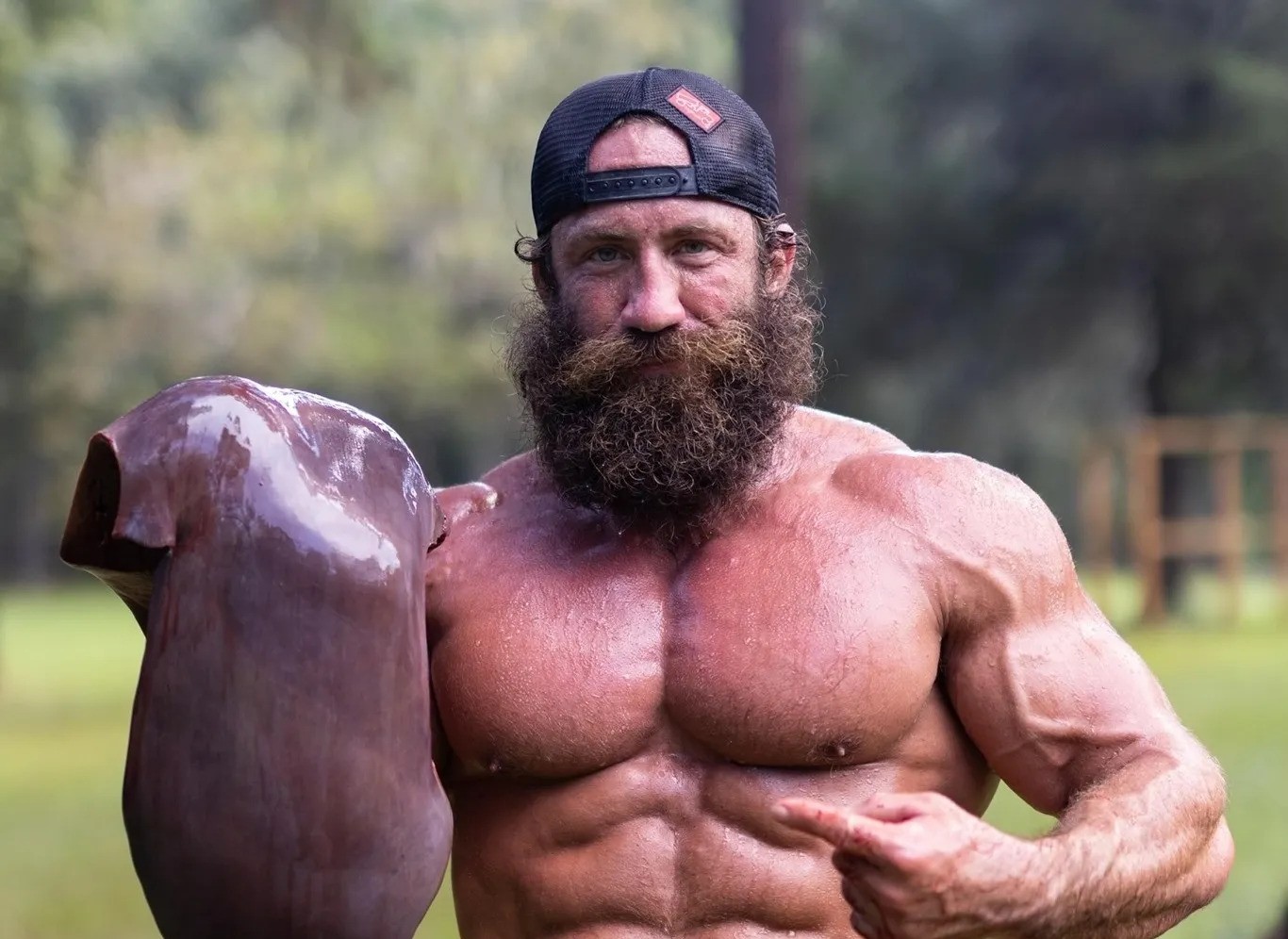
Tim Biohacker shows the creator end: practical credibility, delivered people-first. His content translates elite health optimization into things a regular person can afford and try this week; during the engagement, his account reached 615,000 Instagram followers and pulled 32.1M+ views in a single month. Different register than a physician brand, same architecture underneath, because both engines run on AuthorityOS, the operating system behind our client work: a clear signal, evidence-conscious content, and formats built to earn saves and shares rather than shock.
The lesson across both: in health, the position is the brand. Reach follows the argument, and the argument has to hold up. (Finding the position only you can hold is the Signal Space Framework step of the build.)
How do you build a health personal brand, step by step?
The build sequence for this vertical, compressed:
- Define 1 position you can defend clinically or empirically
- Pick 1 flagship platform where your audience already is
- Set your evidence-labeling rules before publishing anything
- Build the disclosure and disclaimer layer once, as infrastructure
- Publish weekly education that shows your reasoning
- Engage in comments without ever diagnosing
- Measure saves, shares, and qualified inquiries over follower count
If you're a physician specifically, the compliance and peer-perception stakes run higher still; our comparison of personal branding agencies for doctors covers who's built for that. For the broader vertical, we've also ranked the top influencer marketing agencies in health and wellness. And if your lane is training rather than medicine, the series sibling on personal branding for fitness coaches handles that market's very different attention dynamics.
Health is the vertical where most of our proof lives: physician brands, wellness creators, and the funnels underneath them. Book a strategy call and we'll walk through your position, your compliance layer, and what 12 months of a real engine would look like. Bring your skepticism; this vertical rewards it.
Frequently asked questions
Do I need medical credentials to build a health and wellness brand?
Credentials widen what you can safely say, and they aren't the only path. Coaches, researchers, and experienced practitioners build durable brands by matching claims to evidence and staying inside their actual expertise. The requirement is evidence discipline; the credential just raises its ceiling.
Can I share client results in health content?
Yes, with written consent, zero identifiable health information, and honest framing: exact timeframes, the work involved, and typical-result context rather than outlier-as-promise. Regulated professionals should also check their board's advertising and testimonial rules, which are often stricter than platform policy.
How should I handle supplement sponsorships?
Disclose the relationship clearly inside every post, per the FTC's 2023 Endorsement Guides; a platform toggle alone doesn't meet the standard. Only endorse products you'd recommend unpaid, because in this vertical one misaligned sponsorship can cost more trust than the fee is worth.
What's the fastest way to lose trust in this vertical?
Overclaiming: presenting emerging research as settled, personal experiments as universal protocols, or outcomes as guaranteed. The correction machinery in health (credentialed debunkers, comment sections, screenshots) is faster and more permanent than in any other category. Underclaiming costs you a little reach; overclaiming costs the asset.
How long does it take to build authority in health and wellness?
Longer than in most verticals, and it holds longer too. Expect 6 to 12 months of consistent, evidence-disciplined publishing before inbound momentum shows, because health audiences audit before they follow. The upside: authority built this way survives algorithm shifts that wipe out hype accounts.
Should I post about health topics outside my specialty?
Sparingly, and with the evidence labels turned all the way up. Your authority concentrates where your expertise is deepest, and each off-specialty take spends some of it. When you do go adjacent, cite harder, hedge honestly, and route people to actual specialists for the individual questions.
Written by Kenzie Collins, Head of Communications at 1DS Collective. Kenzie runs communications strategy for health and wellness experts whose reputations can't afford hype. Reviewed by John Hyland, Founder.
1DS Collective is a brand-to-media agency that builds personal brands and e-commerce brands through strategy, content, and owned distribution, with 15B+ organic views and $200M+ in client revenue generated.