




1DS Blog
Personal Branding for Fitness Coaches: The 2026 Guide
02 Nov 2026
Personal branding for fitness coaches: the held position, niche-down math, a content engine built for a coach's schedule, and the 1:1 to digital ladder.

Personal branding for fitness coaches means owning a held position in a market drowning in transformation posts: a specific argument about how training should work, aimed at a specific client, backed by results you can prove. Distinctiveness comes from what you argue, and the business ladder underneath turns that attention into income.
I'll be blunt about why I'm writing this one: fitness is where I've spent the most time, and it's the most saturated attention market in the creator economy. The base method for any personal brand is in our founder playbook; this guide is the fitness-specific layer, built for someone who spends 30 hours a week on a gym floor.
Why don't transformation posts differentiate you anymore?
Because every coach posts them, which makes them the category's wallpaper. A before-and-after tells a scroller exactly one thing: you have at least one client who changed. It says nothing about how you think, who you're for, or why you over the 40 other coaches in their feed posting the identical grid.
What differentiates a coach in 2026 is a held position: what you argue, and who you argue with (finding one only you can hold is Signal Space Framework work). The coach who argues that women over 40 should train for strength and openly argues against the bootcamp-and-burnout model is memorable in a way no physique photo can match. The argument does 3 jobs at once: it filters for your actual client, it generates endless content (every trend becomes something to agree or disagree with), and it makes you quotable, which is how fitness audiences pass coaches to their friends.
Pick a position you can defend for years, because you'll be repeating it for years. If nothing in your feed would make another coach push back, you haven't taken one yet.
How do you niche down without shrinking your income?
Run the arithmetic before you trust your fear. A coaching business is fully booked at 30 clients paying $300 a month, which is $108,000 a year, and filling that roster takes a few thousand of the right followers rather than a million random ones.
The niche formula that wins searches and referrals is city plus modality plus client type. "Online fitness coach" competes with the entire planet; "strength coach for postpartum mothers in Austin" competes with maybe 5 people, shows up when someone asks ChatGPT or Google that exact question, and gets repeated word-for-word at a dinner table. Specificity is a distribution strategy, and the narrower phrasing costs you nothing, because clients outside the niche were never hiring the generic version of you anyway.
The niche also sharpens every downstream decision: which hooks to write, which objections to answer, which client results to feature, which products to build when you climb the ladder later. Broad coaches produce broad content, and broad content loses to specific content in every feed, every time.
What does a content engine look like on a coach's schedule?
It runs on 2 habits: filming during sessions and a weekly batch block. You already stand on a gym floor most of the day, which means you're standing inside your content; the engine is mostly about capturing work you're doing anyway.
Filming during sessions (with the client's written consent) produces the raw material nothing scripted can fake: cues delivered mid-set, form corrections as they happen, honest conversations about plateaus. A tripod, a phone, and the habit of hitting record turn a Tuesday session into 3 clips. Then one 90-minute batch block a week handles the rest: talking-head takes on your position, replies to the week's nonsense, and packaging.
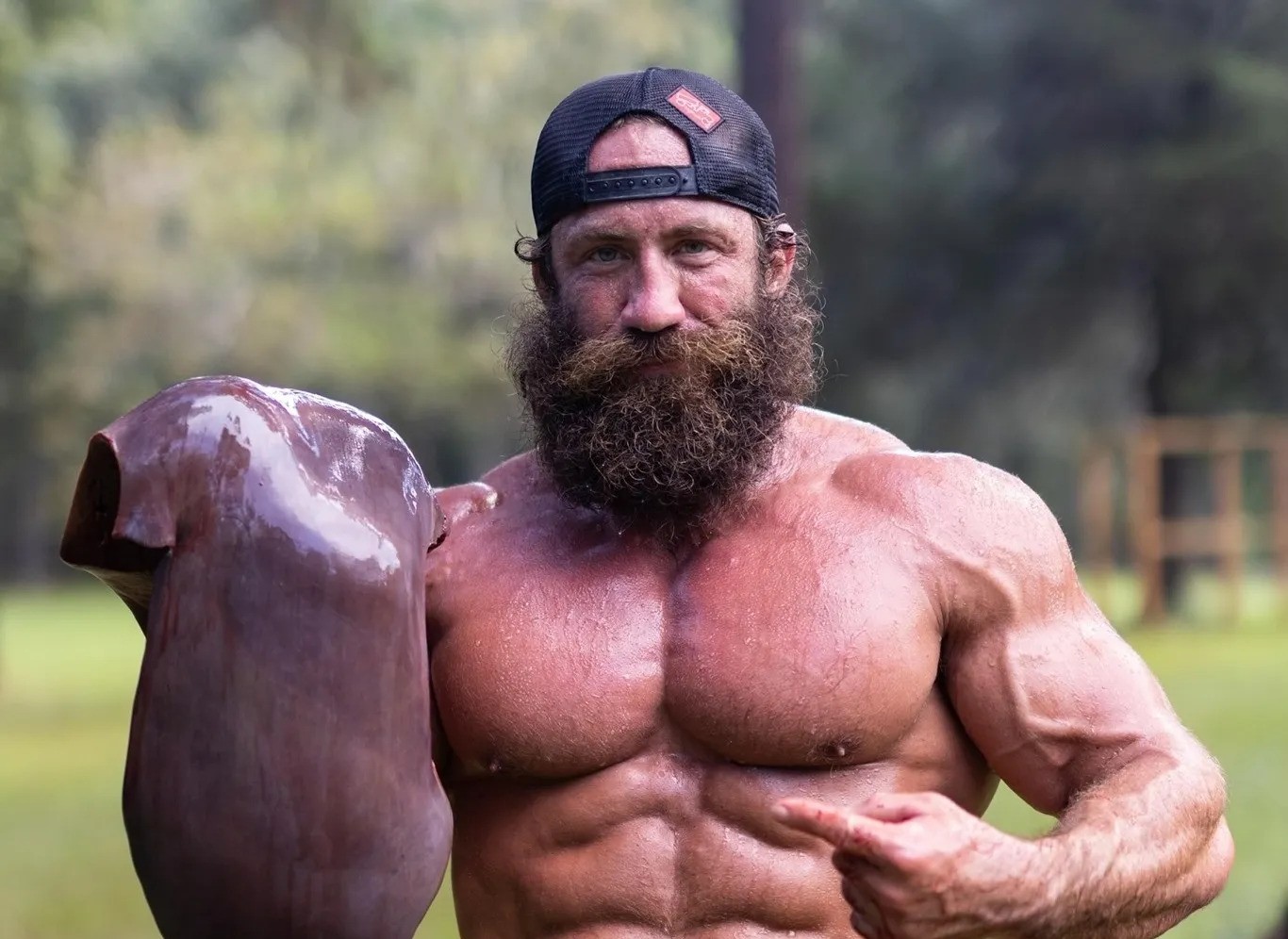
One recorded hour can carry an entire week if you repurpose it properly; the full system is in our content repurposing guide. And when you want to see this architecture running at scale in an adjacent lane, read our Tim Biohacker teardown: 32.1M+ views in a single month, built on 2 workhorse formats and a batch production system, in a health market at least as skeptical as yours.
How do you prove client results without overclaiming?
With receipts and consent, and the discipline to show the process alongside the outcome. Proof is the currency of fitness marketing, and it's also where coaches get themselves in trouble, so the mechanics matter:
- Get written consent for every client feature, every time
- Show the timeframe honestly, including the plateaus
- Include what the client actually did, so the result has a method
- Use names and faces where clients agree; anonymous proof reads as invented
- Frame outcomes as typical-with-work, never guaranteed
- Keep the receipts: check-in screenshots, logged numbers, dated photos
The context is what separates proof from bait. "Lost 14kg" is a claim; "lost 14kg in 9 months, training 3 times a week, through a holiday season and a plateau we adjusted around" is evidence of coaching. The second version also pre-qualifies your leads, because the client it attracts has already accepted what the work looks like.
Measure the brand the same way you measure a client: leading indicators over vanity ones. Consult requests, DMs that mention a specific post, saves on your position content, and "how did you find me" answers tell you the engine works; follower count mostly tells you how long you've been posting. Track the first set monthly and let the second take care of itself.
What's the business model ladder for a coached brand?
Three rungs, climbed in order: 1:1, then group, then digital. Each rung trades some price for scale, and the brand is what lets you climb without the trust falling off.
1:1 coaching validates everything: your method, your niche, your proof library. Group and semi-private training multiplies your hourly economics while keeping delivery personal. Digital products (programs, memberships, communities) finally detach income from your calendar, but they only sell if the brand carries trust at a distance, which is why coaches who jump straight to digital with no audience and no proof stall out.
The launch layer is where this compounds. When a fitness brand with an established audience puts a product into the world, the numbers can get violent; we broke down how The Fittest went from $0 to $500K in 60 days with 20x ROAS on the paid layer. Your version will be smaller at first. The mechanics are the same: audience first, proof second, product third.
When should a coach invest in outside help?
When content has become the bottleneck on a business that's already working: roster near full, proof library stocked, and the constraint is hours rather than demand. Buying help before that point usually buys polish for an audience that doesn't exist yet.
Sequence the investment. An editor is the first hire that matters, because editing is the most hours for the least coaching value. A full agency engine comes later, when the ladder's upper rungs justify it; we've ranked the options honestly, ourselves included, in our guide to the best branding agencies for fitness founders. Our own work in this vertical runs from creators to brands like Body Engineers, the Amsterdam gymwear label, where the same signal-first system, AuthorityOS, the operating methodology behind every 1DS engagement, applies to a product company instead of a person.
And if you build past the coaching business into running a company, the series has an edition for that altitude too: personal branding for CEOs and founders.
Want the fast version of this diagnosis? Book a strategy call and we'll look at your position, your proof, and your ladder together. If the honest answer is "you don't need an agency yet," you'll hear that too.
Frequently asked questions
How many followers does a fitness coach need to make money?
A few thousand of the right ones. A full 1:1 roster is roughly 30 clients, and a tight niche converts followers to consults at rates broad accounts never see. Chase fit and trust before reach; the income arrives well before the vanity numbers do.
Do I need to show my own physique to build a fitness brand?
Your coaching results matter more than your mirror. A visible training practice builds credibility, and plenty of respected coaches build brands on client outcomes, sharp positions, and teaching quality. If your niche is 45-year-old desk workers, your relatability may outsell someone else's abs.
Can I build a personal brand while coaching full-time?
Yes, if the engine is designed for your schedule: film during sessions with consent, run one 90-minute weekly batch block, and repurpose aggressively. Coaches fail at content when they treat it as a second job instead of a capture layer on the first one.
Should gym owners build a personal brand or a gym brand?
Lead with the person, because people follow people and the owner's face converts better than a logo in every local market we've tested. The gym brand inherits the audience. Build both, but put the camera on the human first.
How long before a personal brand starts producing clients?
With a tight niche and consistent posting, the first content-sourced consults typically show inside 3 to 4 months, and referral-quality momentum around month 6 (our observed pattern, never a guarantee). The held position accelerates it; generic content stretches the timeline indefinitely.
Which platform should a fitness coach focus on in 2026?
One flagship: Instagram remains the default for visual coaching proof, TikTok wins for cold reach, YouTube compounds longest for education. Pick the one your specific client actually uses, post consistently for 6 months, then repurpose outward from your winners.
Written by Sam Parham, Co-Founder at 1DS Collective. Sam builds the content engines behind fitness brands and the coaches who run them. Reviewed by John Hyland, Founder.
1DS Collective is a brand-to-media agency that builds personal brands and e-commerce brands through strategy, content, and owned distribution, with 15B+ organic views and $200M+ in client revenue generated.