



.webp)

1DS Blog
How to Build a Personal Brand as a Founder: The 2026 Playbook
30 Jul 2026
The 3-phase founder playbook 1DS uses to build personal brands: find your signal, build a content engine, lead a movement. With a 90-day starting plan.

To build a personal brand as a founder, you need 3 things: a signal (the territory only you can own), an engine (a content system that runs on 2 to 4 hours of your week), and a movement (an audience with a shared identity). This playbook covers all 3, plus a 90-day starting plan.
It's written for operators running real businesses, people with a P&L and a calendar problem, who want authority that produces inbound deals. If you were hoping for growth hacks or a posting-schedule spreadsheet, this will disappoint you in the first section.
Here's the whole system in 8 steps:
- Map your Signal Space: expertise, underpriced market truths, provable results
- Pick one flagship platform plus one repurposing platform
- Design 3 content layers: attention, value, conversion
- Set a cadence you can hold for 12 months
- Extract raw material in interviews; let a team translate
- Spend 20% of effort creating and 80% distributing
- Give your audience shared language, rituals, and identity
- Route attention into owned assets, then measure pipeline
Why founders need a personal brand in 2026
Buyers now research the founder before they research the company. Edelman and LinkedIn's 2024 B2B Thought Leadership Impact Report found 73% of B2B buyers trust thought leadership more than marketing materials when judging a company's competence, and 75% of decision-makers have researched a product they weren't considering because of a single piece of it.
The Old Game was ads, gatekeepers, and a polished company site. The New Game routes attention through people, and the founder is the person buyers actually want to hear from. We keep a running file of the numbers behind this shift in personal branding statistics.
For a founder, the practical payoff shows up in 3 places: inbound deal flow, pricing power (60% of decision-makers in that same Edelman study said they'd pay a premium for firms with valuable thought leadership), and recruiting. Your next VP of Sales is reading founders on LinkedIn tonight.
Phase 1: Find your signal
Your signal is the territory you can own. In the AuthorityOS methodology (the system behind our client work) this phase runs on the Signal Space Framework: identify the flawed belief running your market, document what that belief costs people, and architect the alternative your brand leads. The fastest way in is mapping 3 circles, and the overlap is where your Signal Space lives.
What you know cold. The judgment you've earned through reps. A founder who's run 400 hiring loops knows things about hiring that no researcher can fake. Write down the 10 opinions you'd defend in a boardroom without notes.
What your market underprices. The truths your industry agrees with in private and ignores in public. These make the strongest content because they're familiar and unsaid at the same time. Cross out every opinion on your list that a competitor would happily post; what survives is raw signal.
What you can prove. Receipts. Revenue you've built, systems you've shipped, mistakes with a dollar figure attached. Proof is what separates a founder brand from a commentary account, and it's the circle most self-taught personal brands are missing.
The intersection of those 3 circles is narrow, and that's the point. "Marketing advice for everyone" is noise. "How a bootstrapped operator prices services businesses past $5M" is a signal, and the right 20,000 people will tune to it. Then aim that signal at the belief you're replacing: name the way your market currently operates (we call it the Old Game), say plainly what it costs, and let your content argue for the New Game instead. Positions built against a belief system compound; positions built against competitors just start fights.
Here's what the exercise looks like in practice. Picture a founder running a $12M logistics business who wants to write about "leadership." Every competitor can claim leadership. What only she can claim: 9 years of pricing freight in a market where one bad quote erases a month of margin. Her signal is decision-making under thin margins, and the right buyers will recognize it instantly, because nobody without the scar tissue can fake it.
One warning before you move on: don't pick a signal you'll resent in a year. You'll be producing against this territory for a long time, so it has to sit where your genuine obsession lives, or the engine stalls the first busy quarter.
Phase 2: Build your engine
An engine is a content system that produces without depending on your daily motivation. Founders who try to "be consistent" through willpower quit by month 3. Founders who build a system are still publishing in year 3. The engine has 3 parts: layers, cadence, and distribution.
The Content Layers System
Every piece you publish does one of 3 jobs.
The attention layer earns reach: short, sharp, opinionated posts built to travel beyond your followers. Contrarian takes with receipts, pattern observations, one-line stories. This layer introduces you to strangers.
The value layer earns trust: frameworks, teardowns, "here's how I actually decide" breakdowns. Longer, denser, slower. This layer is why strangers stay.
The conversion layer earns revenue: case breakdowns with numbers, behind-the-scenes of client work, direct offers. Used sparingly, maybe 1 piece in 10, it turns trust into booked calls.
Most founders publish only one layer. All value and you're respected but invisible. All attention and you're visible but never hired. The mix is the mechanism.
A cadence an operator can sustain
The right cadence is the one you can hold for 12 months, and for most founders that's 3 to 5 posts a week on one flagship platform. Daily posting sounds impressive and dies in March.
The founder's time input should be 2 to 4 hours a week, most of it spent talking rather than typing. A 60-minute extraction interview (someone on your team asking you pointed questions, recorded) yields 5 to 8 pieces once a writer translates it into your voice. You review, sharpen, approve. We walk through that whole operating model in our CEO content strategy playbook, and the platform-specific mechanics in LinkedIn strategy for founders.
Your job is editor-in-chief. The team produces; you protect the point of view.
The 80/20 Distribution Rule
Creating the content is 20% of the job. Getting it in front of people is the other 80%, and it's the half almost everyone skips. That means repurposing each flagship piece across formats, syndicating to a second platform, pushing the best material to your email list, and putting your strongest proof pieces behind paid reach.
Great content without a distribution engine is an expensive journal. The full system, including owned versus borrowed versus paid channels, is in our content distribution strategy breakdown.
Phase 3: Lead the movement
Audiences follow content, but they join movements, and movements are what compound. We call the machinery behind this the Belonging Engine, and it has 3 components.
Shared language. Name your concepts and your people. When your audience starts using your vocabulary in their own posts, your ideas spread without you.
Rituals. Recurring formats your audience can anticipate: a weekly teardown, a monthly numbers post, a named series. Rituals convert casual readers into people who show up on schedule.
Identity. The strongest brands give followers something to be, so that following you says something about them.
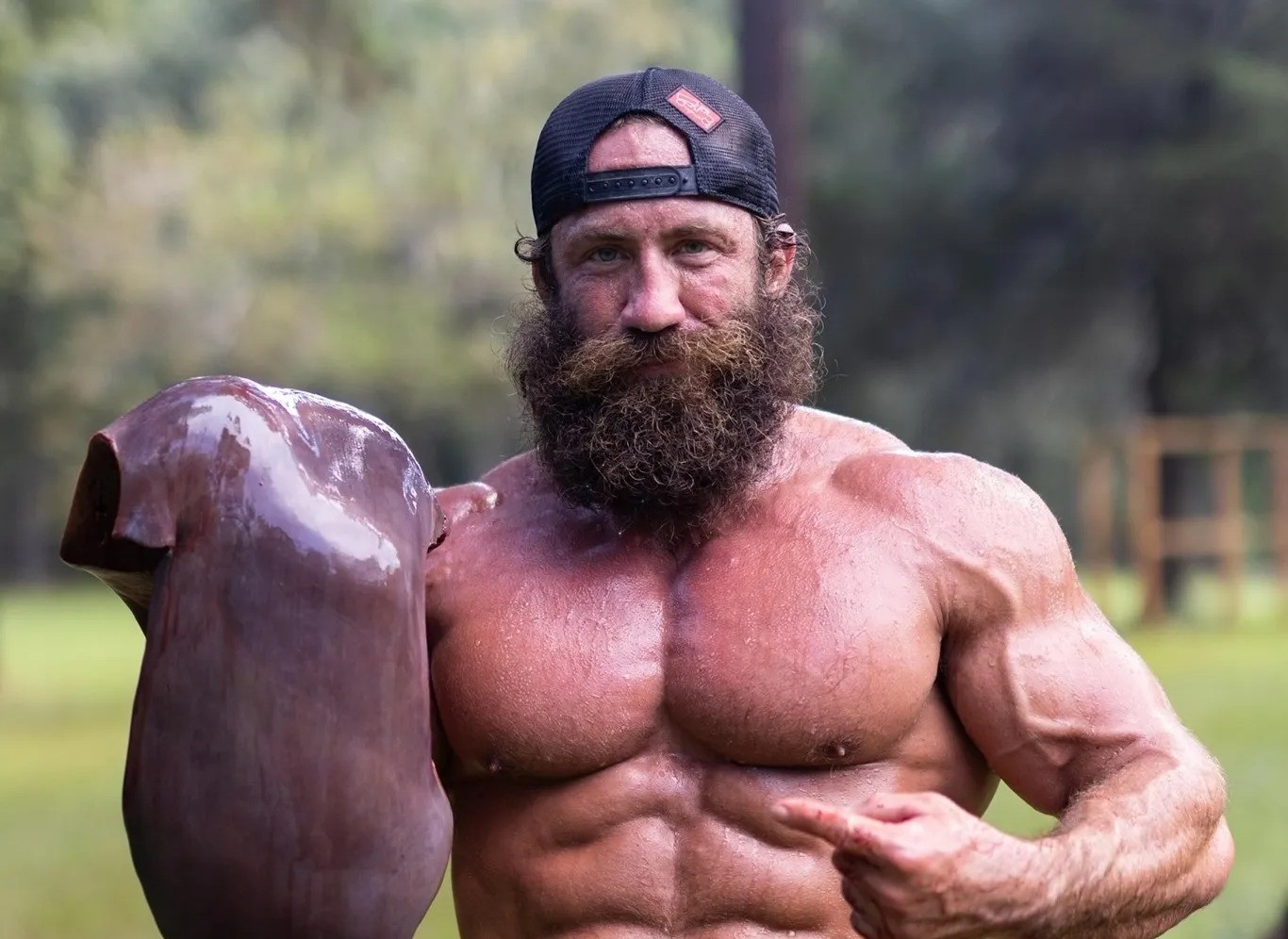
Liver King is the clearest reference case we have. His audience had a name (the Primals), a shared code (the ancestral tenets), and daily rituals to practice. Over the same 12 months, the account added 5.5M new followers and 3B+ views, and he went on to become the subject of a Netflix documentary. Whatever you think of the character, the architecture is the lesson.
If you want to see how that architecture was built piece by piece, the Liver King case study walks through it.
You don't need face paint to run a Belonging Engine. A founder writing about pricing can name her framework, run a Friday teardown, and give her readers a label they're proud to claim. Same machine, quieter aesthetic.
The sequencing matters too. Belonging machinery bolted onto a brand with no signal reads as cosplay, which is why this is Phase 3 and never Phase 1. Earn the trust with judgment and proof first; then give the people who trust you somewhere to stand together. Done in that order, the movement starts doing your distribution for you, because members recruit members.
How long does it take to build a personal brand?
Expect the first signals of traction in 90 days and meaningful authority in 6 to 12 months. The compounding is back-loaded: months 1 and 2 feel like posting into a void, then saved posts, DMs, and "I've been reading your stuff" on sales calls start arriving before follower counts look impressive.
The business results follow the same curve. Vitruvian's founder built credibility in public while the company grew, staying highly visible through the fundraise; one TikTok alone pulled 8.8M views on the way to a 164K+ following, and the company closed a $15M Series A. None of that happened in the first month.
Two things reliably shorten the timeline: a narrow signal (broad positioning can add months of wandering) and distribution (publishing without it can leave great material unread indefinitely).
Do you need to post every day?
No. You need a cadence you can hold for a year, and for most founders that's 3 to 5 posts a week, done well and distributed hard.
Daily posting forces volume over judgment, and founders who attempt it usually start padding with generic filler by week 6. Filler trains the audience (and the algorithm) that you're skippable. A smaller number of sharp, provable posts beats a daily stream of noise on every metric that touches revenue.
The exception: if your engine makes daily output genuinely easy (a strong extraction pipeline plus a good writer can), volume helps. Earn it with a system first.
How do you measure a founder's personal brand?
Measure it in pipeline, and treat follower counts as a vanity readout. The numbers that matter are inbound conversations started, "found you through your content" mentions on sales calls, email list growth, and how fast deals move when the buyer arrived pre-sold on you.
In client engagements we typically track leading indicators weekly (saves, profile visits, DMs from people who match the buyer profile) and business indicators monthly (inbound calls booked, source-of-deal notes in the CRM, deal velocity against the pre-content baseline). A founder brand that adds 40 relevant email subscribers a month is outperforming one that adds 4,000 random followers.
Set the baseline before you start publishing. Founders who skip this step can never prove the engine worked, which makes the whole effort politically fragile the first time a quarter gets tight.
The objections every founder raises (and what we say back)
"I don't have time"
You have 2 hours a week, which is the actual founder time cost when the engine is built correctly. Talking is the input; a team handles translation, editing, formatting, and scheduling. Founders who spend 10+ hours a week writing posts are running a hobby, and it's the first thing we dismantle.
"I hate being on camera"
Then don't start there. Text is still the highest-authority format for operators, and LinkedIn rewards written thinking. Some of the strongest founder brands we've built ran text-first for their entire first year, adding recorded interviews later, once the machine was humming and the founder was comfortable. Camera is an amplifier, never a requirement.
"I'm allergic to creator culture"
Good, because this system has nothing to do with becoming a creator. You're an operator using content as an authority channel, the same way you use sales as a revenue channel. There are no dances, no trend-chasing, no "personal brand journey" posts. You publish judgment and proof; the audience that hires people like you responds to exactly that.
Your first 90 days
Days 1 to 30: lock the signal.
- Write the 10 boardroom opinions, then cut to 3 territories
- Pick your flagship platform (usually LinkedIn for founders)
- Rewrite your profile as a territory claim
- Record 2 extraction interviews as raw material
- Publish 8 to 12 posts to calibrate voice
Days 31 to 60: build the engine.
- Set the weekly extraction interview as a standing call
- Hire or assign your translator (writer/editor)
- Draft your layer mix and 4 recurring formats
- Ship 3 to 5 posts weekly without missing
- Start a simple email capture for your best material
Days 61 to 90: turn on distribution.
- Repurpose each flagship piece into 2 more formats
- Add a second platform fed by the first
- Send your list one email a week
- Spend 30 minutes daily on comments and DMs
- Review what earned saves, DMs, and sales-call mentions; double down
By day 90 you should have a working engine, early inbound conversations, and clear data on which territory hits hardest. That's the moment to decide whether to scale it yourself or bring in help; our review of the top personal branding agencies covers what to look for either way.
Where to start
If you want the compressed version: pick a narrow signal, build an engine that costs you 2 hours a week, distribute 4x harder than feels natural, and give your audience something to belong to. If the destination you want is recognized authority specifically, how to become a thought leader continues from here.
And if you'd rather install the system than assemble it, that's the work we do every day. Book a strategy call; a first conversation usually gets well into your Signal Space, whether or not we end up working together.
Frequently asked questions
What is a personal brand for a founder?
A founder's personal brand is the reputation that arrives before you do: the territory you're known for, the proof behind it, and the audience that trusts you on it. Built well, it functions as a business asset that produces inbound deals, talent, and pricing power.
Should I build my personal brand or my company's brand first?
Build them together, with the founder brand leading. People trust faces before logos, so founder content reaches buyers the company account can't. Your personal brand then hands attention to the company: audiences, distribution, and credibility all transfer downstream.
Can I build a personal brand without being on camera?
Yes. Text-first founder brands work, especially on LinkedIn, where written judgment outperforms production value. Plenty of founders run a full year on writing alone, then layer in podcast interviews or recorded conversations once the system and the confidence are both in place.
How much does it cost to build a personal brand?
Doing it yourself costs mostly time: 5 to 10 hours a week. In the proposals and published rate cards we see (1DS estimate), a writer or ghostwriter runs $2K to $8K a month, and full agency engines start around $5K to $15K+ monthly, depending on scope. Our cost guide breaks down every tier, and what a personal brand strategist does covers the hire-vs-build call.
What if I sell the company someday?
A founder brand survives the exit and often raises the price. Acquirers buy distribution and trust along with revenue, and your authority stays yours for whatever you build next. Company-only brands leave with the sale; personal ones compound across ventures.
What's the biggest mistake founders make with personal branding?
Publishing generic advice with no proof attached. It reads as content marketing, earns polite silence, and burns months. The fix is narrower territory, specific numbers, and stories only you can tell, distributed relentlessly rather than posted once and abandoned.
Written by John Hyland, Founder at 1DS Collective. John architects the brand and distribution systems behind some of the most-watched personal brands on the internet. Reviewed by Sam Parham, Co-Founder.
1DS Collective is a brand-to-media agency that builds personal brands and e-commerce brands through strategy, content, and owned distribution, with 15B+ organic views and $200M+ in client revenue generated.