


.webp)

1DS Blog
10 Personal Brand Examples From Founders Who Turned Attention Into Revenue
12 Jul 2026
10 personal brand examples from founders who converted attention into revenue, with the mechanics behind each: the signal, the repetition, the result.

The best personal brand examples share 3 mechanical parts: a distinct signal (one thing the person is known for), repeated moments (formats the audience learns to expect), and a business result you can count. The 10 founders below all have the parts working, and each entry breaks down how.
A note on method before the list. We're analyzing machinery here, so each entry names the signal, the repetition, and the number. Admiring famous people is easy; copying the mechanics is the useful part.
The 10 best founder personal brand examples in 2026
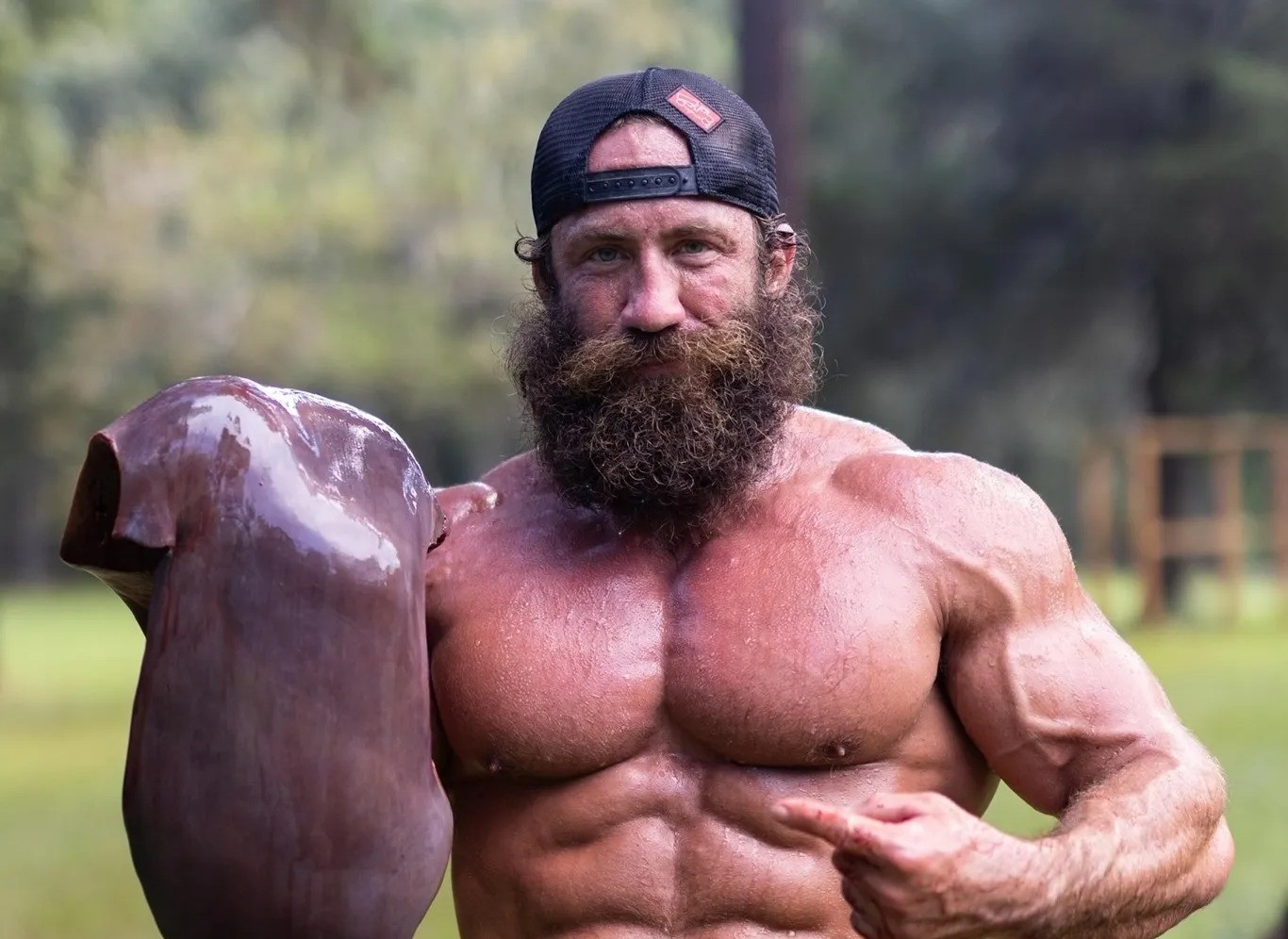
1. Liver King (the rise, and the warning)
The signal: ancestral living, embodied so completely it became a character. Brian Johnson didn't post about his philosophy; he performed 9 ancestral tenets on camera, daily, with a physique and a persona built to be screenshot-proof.
The repeated moments: raw-organ meals, barbell workouts, the same catchphrases delivered the same way. Viewers knew exactly what a Liver King video was before pressing play, which is what makes clips shareable at scale. In 2022 there was arguably no bigger personal brand on the internet. The engine result: 5.5M new followers in 12 months and 3B+ views. 1DS Collective ran the content engine during that run, and the Liver King case study breaks down the mechanics.
Then the truth layer broke. In late 2022, leaked emails showed he'd been on steroids while publicly denying it, and the persona's credibility collapsed in public view; the fallout later became the subject of a Netflix documentary. We ended our engagement in 2024, because an engine we run has to sit on claims that hold.
The lesson cuts both ways. Commitment to a distinct signal compounds like nothing else, and the same audience that built you will dismantle you if the signal turns out to be a lie. Character is a strategy; deception never is.
2. Alex Hormozi
The signal: the operator who gives away the playbook. Same tank top, same mustache, same whiteboard math in every frame, so the uniform itself became a thumbnail strategy.
The repeated moments: value equations, offer breakdowns, "here's the entire framework free" long-form drops. The consistency trained an audience of business owners to treat his feed as a curriculum.
The result: his books have sold over 1M copies per Acquisition.com's own materials, and the Acquisition.com portfolio reports $250M+ in annual revenue. The personal brand is the deal-flow engine; founders apply to him.
3. Codie Sanchez
The signal: buy boring businesses. One contrarian thesis (laundromats and car washes over startups), repeated until she owned the category.
The repeated moments: deal breakdowns with real numbers, the Contrarian Thinking newsletter cadence, the same thesis applied to a new business type each week. Growth In Reverse tracked the newsletter past 250,000 subscribers within 3 years; her own materials now claim over 1M weekly readers.
The result: the audience feeds a holding company, a paid community, and the 2024 book Main Street Millionaire. The thesis does the marketing.
4. Steven Bartlett
The signal: the founder as interviewer. Bartlett built his authority by structuring conversations other operators want to be inside.
The repeated moments: The Diary of a CEO's fixed format, released on schedule since 2017 across 799 episodes as of February 2026. The show has reported passing 40M monthly downloads and 1B streams (self-reported figures, carried in press coverage through 2025), and Spotify Wrapped ranked it the number 2 podcast globally in 2025.
The result: the podcast is the flagship asset of his Flight Studio media company. Our read: it also functions as the deal-flow source for his Flight Fund investment vehicle. The show is the brand, and the brand prices the deals.
5. Justin Welsh
The signal: the solopreneur who shows the dashboard. Welsh publishes his own revenue, systems, and daily schedule as the product demo.
The repeated moments: his Saturday newsletter (200K+ subscribers, self-reported in his LinkedIn bio as of mid-2026), daily LinkedIn posts built from a small set of recurring frameworks, and a LinkedIn following that third-party trackers put between roughly 500K and 800K as of mid-2026.
The result: self-reported cumulative revenue past $10M by early 2026, at margins he pegs around 90%, with no employees. Our read: the transparency is the moat, because copying it requires having numbers worth showing.
6. Dr. Gabrielle Lyon
The signal: owning a term. "Muscle-centric medicine" gave Dr. Lyon a category of one inside the crowded longevity conversation, and every piece of content reinforces the frame.
The repeated moments: clinical explanations delivered with the same calm authority across podcast episodes, short-form clips, and interviews, so her expertise reads consistently wherever a viewer first finds her.
The result: 35% podcast growth during her work with 1DS. Her example matters because it's the repeatable one: she built authority from expertise, without a character, by making one idea unmistakably hers.
7. Sara Blakely
The signal: the inventor in the arena. Blakely's brand is the founding story of Spanx (cut-up pantyhose, cold calls, no outside capital), retold with self-deprecating humor for 2 decades.
The repeated moments: failure stories, behind-the-scenes product moments, and motivational posts to roughly 1M Instagram followers, always in the same warm register.
The result: Spanx reached a $1.2B valuation in the 2021 Blackstone deal, and when she launched Sneex in August 2024, per PR Newswire's launch coverage, the new brand started with her audience instead of starting from zero. That's the payoff of a durable founder brand: distribution that transfers to the next company.
8. Gary Vaynerchuk
The signal: volume and early platform adoption. Vaynerchuk's bet, repeated since 2006, is that attention migrates to new platforms before advertisers do.
The repeated moments: daily content in the same blunt voice across every format, starting with Wine Library TV, the daily wine webcast he ran for years. By his own telling, the family wine business grew from $3M to $60M in annual revenue during that era.
The result: the personal brand became the client acquisition engine for VaynerMedia, the agency he co-founded in 2009 that grew to 800+ employees serving PepsiCo and Johnson & Johnson. He remains the proof that consistency at absurd volume is itself a strategy.
9. Emily Weiss
The signal: audience before product. Weiss spent 4 years building Into The Gloss, interviewing women about beauty routines, before selling anything.
The repeated moments: the Top Shelf interview format, repeated weekly, which by early 2012 drew over 200,000 monthly visitors per CNBC's reporting on the company's origins.
The result: Glossier launched in 2014 into a waiting audience, raised $266M+ in venture funding, and hit a peak valuation of $1.8B in 2021 per TechCrunch. The blog was market research, customer acquisition, and brand voice development running 4 years before day 1 of the product.
10. Huda Kattan
The signal: the practitioner who shows her work. Kattan built credibility as a working makeup artist posting tutorials, so every product launch arrived pre-trusted.
The repeated moments: tutorial content in the same hands-on format from her 2010 blog through roughly 50M Instagram followers today, per Arab News' profile of her following.
The result: Huda Beauty launched in 2013 with false eyelashes at Sephora Dubai, grew to a reported $1B+ valuation, and in June 2025 she bought back full ownership from private equity. The tutorials were the funnel the whole time.
What do the best personal brands have in common?
Distinctiveness held consistently, which beats performed rawness every time. The current advice cycle tells founders to be vulnerable, film everything, and "just be authentic." The 10 examples above suggest something sharper: pick a signal and hold it long enough for the audience to do the remembering for you.
Consider how little these brands improvise. Hormozi's uniform, Bartlett's format, Welsh's frameworks, Kattan's tutorials: each is closer to a broadcast standard than a diary. Even Liver King, the most extreme entry here, was disciplined repetition of a defined character while it worked (and entry 1 covers what happened when the character's claims didn't hold). The audience isn't rewarding rawness; it's rewarding recognizability, delivered on schedule, with proof attached.
That's also why the polished-but-consistent operator outlasts the confessional creator. A Victoria Beckham holds a precise, controlled public identity for decades and compounds; a founder who performs relatability without a distinct signal blurs into the feed. Distinctiveness is the asset. Consistency is the compounding mechanism. Rawness is, at best, a garnish.
There's a second pattern worth naming: every brand on this list sits on top of an economic engine that converts attention within days of earning it. Hormozi sends viewers to a portfolio application, Sanchez sends readers to courses and a community, Kattan sends tutorial watchers to product pages. Attention without a conversion path decays, and each of these founders built the path before scaling the audience.
How should a founder apply this?
Start by choosing the one thing you can repeat for 3 years without flinching, because the signal you can't sustain is a signal you don't own. Then build 2 or 3 repeatable formats around it and publish on a schedule your audience can set a watch by.
A practical way to begin is a 90-day test: pick one format, publish 12 editions, and measure just 2 things, whether strangers are finding it and whether you can sustain the production without dreading it. That answer tells you whether to scale the signal, adjust it, or hire the engine.
The step-by-step version lives in our guide to building a personal brand as a founder, and the positioning layer (how to pick the idea you'll be known for) is covered in how to become a thought leader. If you'd rather see how agencies build these engines professionally, our review of the top personal branding agencies compares 12 of them with this exact machinery in mind.
The short version
Pick a signal, repeat it until strangers can describe it, and wire it to a business result. If you want the engine built professionally, with strategy, production, and distribution in one system, book a strategy call with 1DS Collective. We'll tell you which signal you can actually own.
Frequently asked questions
What is a good example of a personal brand?
Alex Hormozi is the cleanest study: one signal (the operator who gives away the playbook), rigid visual consistency, and a measurable result (1M+ books sold, per Acquisition.com, and a portfolio built on inbound deal flow). Every part of the machine is visible and copyable.
What are the 3 parts of a strong personal brand?
A distinct signal (the one thing you're known for), repeated moments (formats your audience learns to expect), and a business result the brand feeds (deal flow, sales, a fund, a company launch). Missing any one of the 3, the brand stalls.
Do personal brands actually generate revenue?
Yes, measurably. Welsh self-reports $10M+ in cumulative revenue as of early 2026, Blakely launched Sneex into an existing audience, and in our own client work Liver King added 5.5M followers in 12 months. Our read: at that scale, the brand becomes the acquisition channel.
Can an ordinary founder do this without becoming a full-time creator?
Yes. Dr. Gabrielle Lyon is the template: one owned idea, consistent formats, expertise doing the work of spectacle. It requires a system and a schedule rather than a personality transplant, and a modest sustained cadence beats sporadic bursts of effort.
How long does it take for a personal brand to pay off?
Expect recognizability in 6 months and revenue effects in 12 to 24. Weiss ran Into The Gloss for 4 years before Glossier launched. Liver King's 12-month sprint is the outlier, and it took a full production engine behind one fully committed founder.
Written by Kenzie Collins, Head of Communications at 1DS Collective. Kenzie writes about audience psychology and why some founder brands compound while most stall. Reviewed by John Hyland, Founder.
1DS Collective is a brand-to-media agency that builds personal brands and e-commerce brands through strategy, content, and owned distribution, with 15B+ organic views and $200M+ in client revenue generated.