


1DS Blog
Inside the Vitruvian Engine: 8.8M-View TikToks and a $15M Series A
02 Nov 2026
Inside the Vitruvian engagement: founder credibility, an 8.8M-view TikTok, and staying visible through a $15M Series A. The full teardown, step by step.

Vitruvian, the fitness-tech company behind the Trainer+ adaptive resistance platform, worked with us on brand, content, and launch. During the engagement, a single TikTok hit 8.8M views, the brand passed 164K followers, and the company raised a $15M Series A. This is the teardown of how the engine was built.
One framing note before the numbers, because we hold ourselves to it in every case study: the content system and the fundraise ran side by side. Investors make decisions for their own reasons, and we present the visibility work and the raise as parallel facts, with our interpretation labeled as interpretation.
Why hardware brands struggle on social
Hardware is the hardest product category to make travel on social, and fitness hardware doubles the difficulty. Four reasons come up in nearly every fitness equipment brand we evaluate:
- The product cycle is slow. Software brands ship something new weekly. A machine ships once, so the feed has to run on ideas, not announcements.
- The demo is the whole pitch. A resistance platform means nothing in a spec sheet. Until someone sees a body under load, the product is an abstraction.
- The price point demands trust. Connected fitness equipment is a considered purchase. Buyers research the company and, increasingly, the people behind it before they spend.
- The category defaults to sameness. Black equipment, chrome type, transformation montages. When every brand shoots the same ad, attention goes to whoever breaks the pattern.
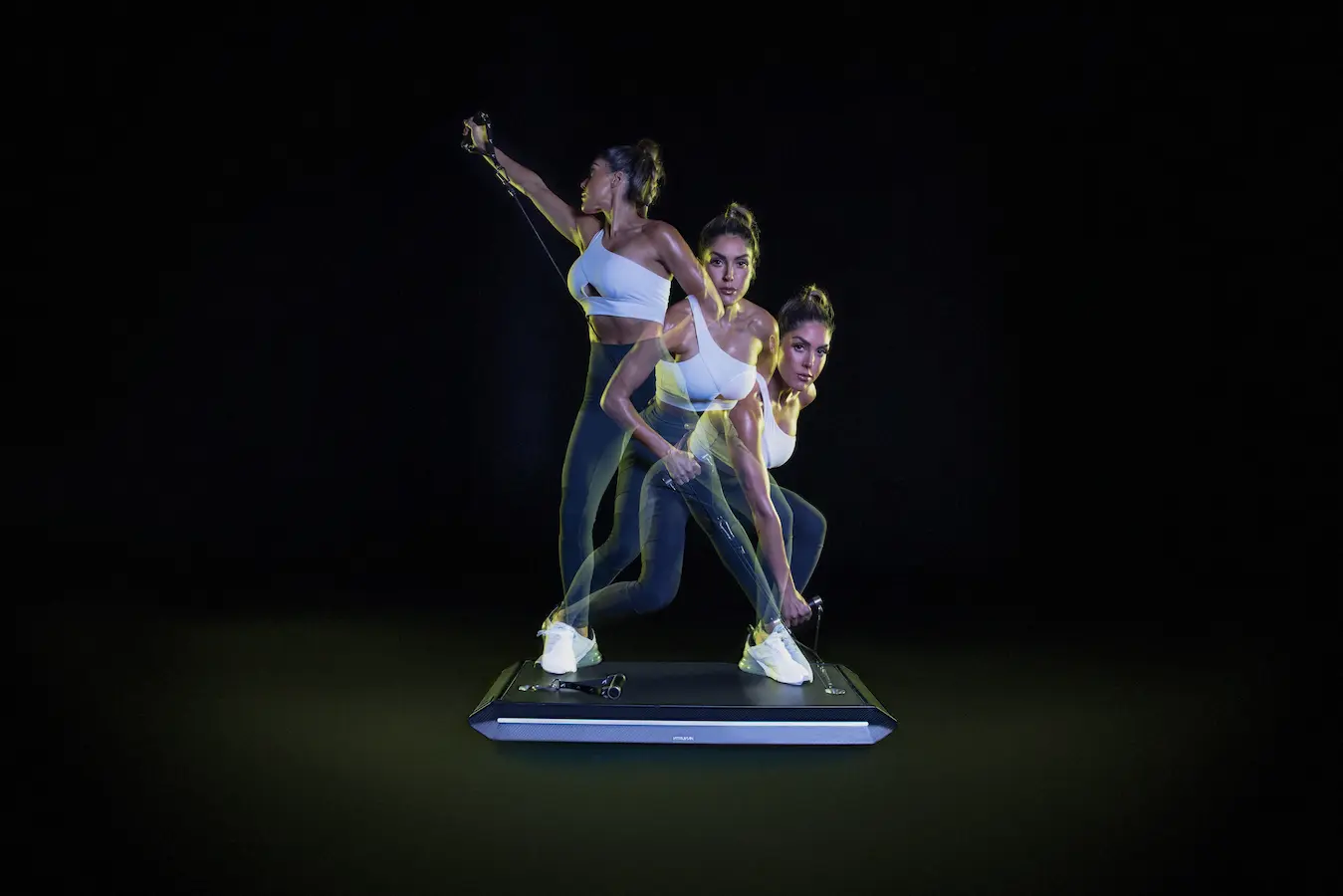
Vitruvian had a genuine pattern-breaker to work with: the Trainer+ delivers up to 440 lbs of digitally controlled resistance from a platform the size of a doormat. The marketing problem sat one layer up: the brand hadn't yet translated that engineering into things a feed wants to watch.
The signal work: founder credibility as the wedge
The first move in AuthorityOS, the operating system we run under every engagement, is finding the signal: the thing only this brand can say credibly. For Vitruvian, that was the founder himself.
Jon Gregory founded Vitruvian to solve a problem he understood from the inside, and that origin gave the brand something no competitor could copy: a technical founder who could explain, on camera, why adaptive resistance behaves differently from a stack of iron plates. In a considered-purchase category, that voice matters, and the research backs the instinct. Per the 2025 Edelman-LinkedIn B2B Thought Leadership Impact Report, 71% of the hidden buyers inside B2B purchase decisions say thought leadership demonstrates a vendor's potential value more effectively than traditional marketing materials, and 64% trust it more when assessing capability. Fitness hardware buyers behave like B2B buyers in this respect: they evaluate the company, not just the ad.
So the brand system we built put the founder and the engineering story at the center rather than burying them under lifestyle gloss. The identity work (Vitruvian Blue and charcoal, a custom typeface, the signature V) was deliberately dignified, built to read as engineering-grade rather than supplement-grade. We've written before about how to split airtime between the two surfaces in founder brand vs company brand; Vitruvian is the case where the company brand carried the design load and the founder carried the credibility load.
The short-form system, and the 8.8M-view TikTok that landed during it
The headline number from the engagement is the single TikTok on @vitruvian.form that reached 8.8M views, with a second post at 4.4M and 850K+ partner views on Instagram during the launch window. Which post breaks out is never predictable, so what's worth describing is the publishing system that ran through the same window, because the system is the repeatable part.
The content ran on tension, not specs. What makes fitness-tech content travel is watching the machine do something that looks impossible: a compact platform out-pulling a loaded barbell, an athlete losing a tug-of-war with a doormat. Every high-performing concept had a visible question in the first second ("that little thing does what?") and answered it with the product under real load.
60 days of pre-launch compression. The launch content sprint ran in the 60 days before launch, so the account arrived with momentum instead of building in public from zero. The sprint was designed for volume, enough published concepts to leave room for outliers. The 8.8M-view post landed inside that window.
Physical proof at the center of every asset. Instead of motion graphics explaining resistance curves, the assets showed bodies, load, and strain, filmed close. In a category where the buyer's core question is "does this thing actually work," the content answered with evidence instead of claims.
One engine, many surfaces. The same creative spine fed TikTok, Instagram, partner and creator accounts, the website, and the CES 2022 stand where the Trainer+ launched to media. The 80/20 Distribution Rule we run (most of the effort goes to pushing content through surfaces, a minority to making it) is why a single strong concept showed up everywhere a buyer or journalist might look in the same week.
The scoreboard from the engagement: 8.8M views on the top TikTok, 4.4M on the next, 850K+ Instagram views across partner accounts, and 164K+ followers on the brand account (1DS Collective internal data, from the published Vitruvian case study).
What investor-facing visibility does during a raise
Here's where we're careful, and where most agency case studies aren't. Vitruvian raised a $15M Series A. The raise happened while the founder and brand were highly visible, and we present those as parallel facts. What follows is our read, an interpretation from having watched this pattern across funded clients, not a claim of cause.
Our read: visibility changes the context a raise happens in, three ways.
- Diligence starts warm. When a partner googles the company mid-process, they find a founder articulating the technology to millions of viewers instead of a dormant brand account. The first impression is momentum.
- Traction becomes visible without being argued. An 8.8M-view TikTok and a six-figure following are public numbers. They enter the room before the deck does, and no investor has to take the company's word for consumer interest.
- The founder reads as the distribution advantage. In DTC hardware, customer acquisition cost is the perennial investor worry. A founder who demonstrably earns attention is a partial answer to that question, sitting in plain sight.
Product, unit economics, and the team are what close a round. What visibility does, in our view, is remove the doubt tax: the discount investors apply to companies they've never seen anyone care about. That's also why we build these systems as founder-led marketing engines rather than brand accounts with a logo posting into the void.
The repeatable checklist for funded hardware founders
The Vitruvian engine reduces to moves any funded DTC or hardware founder can run. The checklist:
- Find the one claim only your product can demonstrate on camera.
- Put the founder's face and expertise at the center early.
- Build a dignified brand system; skip the category clichés.
- Compress launch content into a 60-day pre-launch sprint.
- Film physical proof of the product working.
- Ship enough volume for outliers to find you.
- Push one creative spine through every surface at once.
- Keep the founder visible through the fundraise window.
- Publish your numbers once they're verifiable; public proof compounds.
If you run a fitness or hardware brand and want to see who's doing this work well across the category, we published an honest field guide in our top branding agencies for fitness founders roundup.
The full engagement details, including the brand identity and launch scope, are in the published Vitruvian case study. If you're a funded founder with a physical product and an invisible brand, book a strategy call. We'll walk through what a 60-day launch engine would look like against your product and your raise timeline.
Frequently asked questions
What results did Vitruvian see during the 1DS engagement?
A single TikTok on the brand account reached 8.8M views, a second hit 4.4M, partner Instagram accounts added 850K+ views, and the brand grew past 164K followers. Vitruvian also raised a $15M Series A during this period (1DS Collective internal data).
Did the content cause the $15M raise?
The honest answer is that the content engine and the raise ran in parallel, and any agency claiming cause is overreaching. Our read is that founder visibility warms diligence and makes traction publicly verifiable, but investors decide on product, economics, and team.
Why does founder visibility matter for fitness equipment brands?
Fitness hardware is a considered purchase, so buyers evaluate the company like B2B buyers do. Per the 2025 Edelman-LinkedIn report, 64% of hidden buyers trust thought leadership over marketing materials when judging capability, and a technical founder on camera is exactly that.
What was Vitruvian's 8.8M-view TikTok?
A post with a visible question in the first second, answered by the product under load. It landed during a 60-day pre-launch sprint that shipped high volume across every surface; the view count is an observed result from that window, and outliers can't be scheduled.
Does this playbook apply outside fitness?
Yes, to any considered-purchase physical product. The core moves (a demonstrable claim, a credible founder on camera, physical proof over explanation, compressed launch volume) transfer directly to hardware, appliances, and premium DTC categories.
Written by John Hyland, Founder at 1DS Collective. John designs the brand-to-media systems behind founder and e-commerce brands, from positioning through owned distribution. Reviewed by Sam Parham, Co-Founder.
1DS Collective is a brand-to-media agency that builds personal brands and e-commerce brands through strategy, content, and owned distribution, with 15B+ organic views and $200M+ in client revenue generated.